
When it comes to remodelling a bathroom, flooring is one of the most important decisions you’ll make. It’s not just about looks. In 2026, bathroom flooring must handle water, humidity, and daily use—while also staying stylish. The good news? You’ve got more durable, waterproof, and affordable options than ever before. This guide breaks it all down.
Only two of the seven options in this guide are fully waterproof: porcelain or ceramic tile, and vinyl in LVT or sheet form. Everything else manages water rather than stopping it, so it needs sealing, tanking or a dry room to survive. Choose by water first, then by slip resistance, then by what the floor below will accept: a screed that is still damp will lift any of them.
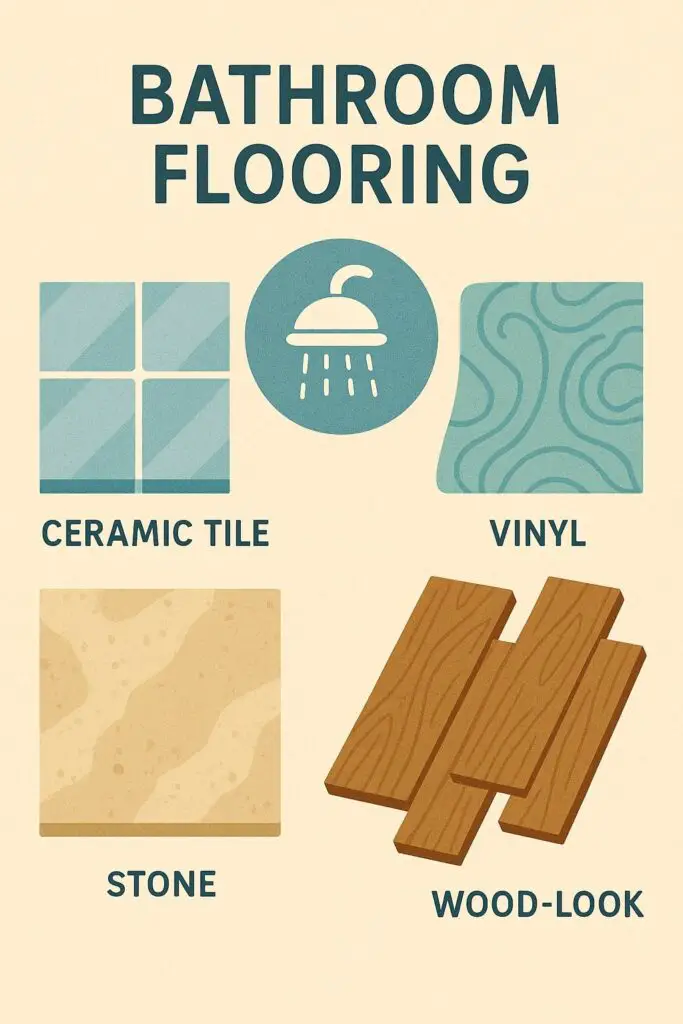
Why Bathroom Flooring Needs Special Consideration
Bathrooms are moisture-rich environments, and your floor must be up to the task. Here’s what makes bathroom flooring unique:
- Water and Moisture Resistance: Constant exposure to water means your floor must resist swelling, warping, and mould.
- Safety: Slip resistance is key, especially for families with children or elderly individuals.
- Durability: Daily traffic, spills, and cleaning agents take their toll. You need flooring that lasts.
- Style: Floors set the visual tone for the entire space.
Top 7 Bathroom Flooring Options in 2026
1. Porcelain and Ceramic Tiles
These remain the most popular choices for a reason.
Pros:
- 100% waterproof
- Huge design range (wood-look, marble-look, textures)
- Compatible with underfloor heating
Cons:
- Cold and hard underfoot
- Grout requires maintenance
Cost: £25–£60/m² (tiles only)
Maintenance: Annual grout sealing recommended
2. Vinyl Flooring (LVT and Sheet Vinyl)
A 2026 favourite, combining affordability with style.
Pros:
- Waterproof and warm underfoot
- Realistic textures and patterns
- DIY-friendly installation
Cons:
- Can dent or scratch
- Sheet vinyl harder to repair
Cost: £10–£30/m²
Maintenance: Easy-clean, no sealing required
3. Natural Stone
Luxury meets nature.
Pros:
- Elegant and high-end appearance
- Long lifespan
Cons:
- Requires sealing
- Slippery when wet unless textured
Cost: £40–£150/m²
Maintenance: Seal every 6–12 months
4. Engineered Wood
A more water-resistant version of solid hardwood.
Pros:
- Warm and natural aesthetics
- Better moisture resistance than solid wood
Cons:
- Still not 100% waterproof
- Higher upfront cost
Cost: £35–£90/m²
Maintenance: Damp mop only
5. Waterproof Laminate
Now upgraded with new core materials.
Pros:
- Looks like wood, performs better in wet spaces
- Budget-friendly
Cons:
- Not suitable for standing water
- May need edge sealing
Cost: £15–£40/m²
6. Concrete
Modern, sleek, and durable.
Pros:
- Waterproof when properly sealed
- Customisable finishes
Cons:
- Cold and hard
- Cracks can develop without correct install
Cost: £50–£100/m²
7. Cork and Bamboo
Eco-conscious options that can work well when treated.
Pros:
- Renewable materials
- Soft and warm
Cons:
- Not fully waterproof unless sealed
- Sensitive to humidity changes
Cost: £20–£50/m²
Bathroom Flooring Comparison Table
| Flooring Type | Waterproof | Price Range (per m²) | DIY-Friendly | Eco Score | Maintenance |
|---|---|---|---|---|---|
| Porcelain Tile | ✅ | £25–£60 | ❌ | ✅ | Medium (grout) |
| Vinyl (LVT/Sheet) | ✅ | £10–£30 | ✅ | ✅ | Low |
| Natural Stone | ✅ | £40–£150 | ❌ | ⚠️ Mixed | High (sealing) |
| Engineered Wood | ⚠️ | £35–£90 | ❌ | ✅ | Medium |
| Laminate (Waterproof) | ⚠️ | £15–£40 | ✅ | ✅ | Medium |
| Concrete | ✅ | £50–£100 | ❌ | ✅ | Low |
| Cork/Bamboo | ⚠️ | £20–£50 | ✅ | ✅ | High (sealing) |
What’s New in 2026? Bathroom Flooring Trends You Shouldn’t Miss
- Underfloor Heating: Rapid adoption, especially in new builds
- Extra-Large Tiles: Reduce grout, increase perceived space
- Seamless Vinyl Sheets: One-piece waterproofing
- Green Materials: Carbon-neutral floors, FSC wood, recycled tiles
Cost of Bathroom Flooring in 2026
Cost Breakdown by Material
| Material | Material Only | Installed Price |
|---|---|---|
| Porcelain Tile | £25–£60/m² | £50–£120/m² |
| Vinyl (LVT/Sheet) | £10–£30/m² | £25–£60/m² |
| Engineered Wood | £35–£90/m² | £60–£130/m² |
| Natural Stone | £40–£150/m² | £80–£200/m² |
| Laminate | £15–£40/m² | £30–£80/m² |
Labour & Installation Fees
- Average tile fitting: £25–£60/m²
- Vinyl install: £10–£25/m²
- Specialist flooring (stone/concrete): £40+/m²
Maintenance and Replacement Cycle Costs
- Resealing stone: ~£5–£10/m²/year
- Grout replacement: £100–£300 (every 5–10 years)
Waterproofing: The Non-Negotiable Rule
Subfloor Prep
Level, dry, and clean. Cement boards or waterproof panels like HardieBacker recommended.
Sealing and Underlay Options
- Schluter-DITRA waterproof membrane
- Ardex or Laticrete systems
Common Waterproofing Errors
- Using standard plywood under vinyl
- Not sealing edges and transitions
- Forgetting waterproof tape in seams
Bathroom Flooring for Small vs. Large Bathrooms
Visual Perception and Colour Play
- Small bathrooms: Light tones, reflective tiles, minimal seams
- Large bathrooms: Textured, darker options create warmth
Scaling Flooring with Space Size
- Use large tiles to reduce grout lines
- Continuous flooring across wet and dry zones increases visual space
Lifestyle-Based Flooring Choices
Family Homes
- Vinyl or waterproof laminate for ease and safety
- Non-slip surfaces critical
Elderly or Disabled Access
- Textured tiles or rubber-backed vinyl
- Avoid thresholds or slippery finishes
Buy-to-Let vs. Forever Homes
- Rental: Durable, budget options like sheet vinyl or LVT
- Forever: Go for aesthetics and comfort—engineered wood, tile
DIY vs. Professional Installation
Pros and Cons for Each Approach
- DIY Pros: Saves on labour, flexible timeline
- DIY Cons: Risk of mistakes, voiding warranties
- Pro Install Pros: Quality assurance, complex layouts handled
- Pro Install Cons: Higher upfront cost
Eco-Friendly Bathroom Flooring Choices
- FSC-certified wood
- FloorScore vinyl
- Recycled porcelain and natural stone
- Look for low-VOC glues and sealants
Resources: FloorScore Certification
Maintenance Tips to Extend Lifespan
- Use bathmats to catch water
- Clean with neutral cleaners
- Reseal stone/tile as needed
- Avoid abrasive tools
Mistakes to Avoid with Bathroom Flooring
- Choosing flooring not rated for moisture
- Poor subfloor prep
- Skipping waterproof membrane
- Using gloss-finish tiles without slip treatment
Where to Buy Quality Bathroom Flooring in 2026
UK Retailers:
International Retailers:
The numbers that decide it
Slip resistance is the number most bathroom floors fail on, and it is measured two ways. In the UK the measure that matters is the Pendulum Test Value, or PTV, tested to BS 7976. A wet PTV of 36 or above is classed as low slip potential by the Health and Safety Executive and the UK Slip Resistance Group, 25 to 35 is moderate, and below 25 is high. Tile boxes often quote an R rating instead, from the DIN 51130 ramp test: R10, a slope of 10 to 19 degrees, suits a private bathroom, and R11, 19 to 27 degrees, suits wet rooms and communal showers. R ratings come from a laboratory ramp test and do not convert into PTV, so ask for the wet PTV when you can.
For vinyl, the wear layer decides how long the floor lasts in a wet room. A 0.3 mm wear layer suits a lightly used bathroom, and 0.5 mm suits a family bathroom that is used every day. That is 12 mil and 20 mil in the sizes most manufacturers print, since 1 mil is 0.0254 mm.
The floor below matters as much as the floor on top. The subfloor must be flat to 3 mm over 3 m, and a screed must read below 75 percent relative humidity to BS 8203 before anything is laid on it. A new screed dries at about 1 day per millimetre, so a 50 mm screed needs about 50 days, and the moisture test, not the calendar, decides the date. Underfloor heating is fine under tile and vinyl, but keep the floor surface at 27 degrees Celsius or below, and commission the heating to BS EN 1264-4 before the floor goes down.
In the shower zone, tiles need a waterproof tanking membrane behind them, and sheet vinyl needs its seams sealed. A waterproof floor with unsealed joints is not waterproof.
Worked example: a 2.4 by 2.0 metre bathroom
A bathroom 2.4 m by 2.0 m has a floor area of 4.8 square metres. With 600 by 300 mm tiles, each tile covers 0.18 square metres, so 4.8 divided by 0.18 gives 27 tiles. Add 10 percent for cuts and breakages and order 30 tiles. With LVT planks 1,219 by 178 mm, each plank covers 0.217 square metres, so 4.8 divided by 0.217 gives 23 planks, and 10 percent extra takes the order to 26 planks. If the room has a new 50 mm screed, allow about 50 days of drying before the moisture test, and lay the floor only after the test passes.
Conclusion
In 2026, bathroom flooring offers a blend of form, function, and future-readiness. Whether you’re upgrading for luxury or utility, there’s an option to fit your budget, lifestyle, and design dreams. Make water resistance your baseline, then build up with comfort, style, and eco-conscious choices.
FAQs
What is the most waterproof bathroom flooring?
Porcelain tile and LVT are the most waterproof, durable choices available.
Can I use wood flooring in a bathroom?
Only engineered wood, and it must be sealed and properly installed.
How often should I replace my bathroom flooring?
Most high-quality options last 15–25 years with proper care.
Are heated floors worth it in bathrooms?
Yes—especially with tile. They add comfort and boost home value.
Which flooring is best for DIYers?
Click-lock vinyl and laminate are easiest for self-installers.