
I ruined my first flat. Spent close to four thousand pounds over eight months buying things I thought looked good, and ended up with a space that felt like a Travel Lodge designed by someone with genuinely no eye for it. Nothing worked together. The rug was too small. The lighting made everything look like a GP waiting room. I sat in the middle of it one evening and could not for the life of me figure out where it had gone wrong.
It went wrong because I had no idea what I was doing. I was just buying things I liked individually and hoping they’d sort themselves out once I got them home. They never did.
If you’re about to start decorating — first flat, new house, or just finally getting round to that room you’ve been ignoring for two years — read this first.
1. Pick your colours before you buy anything
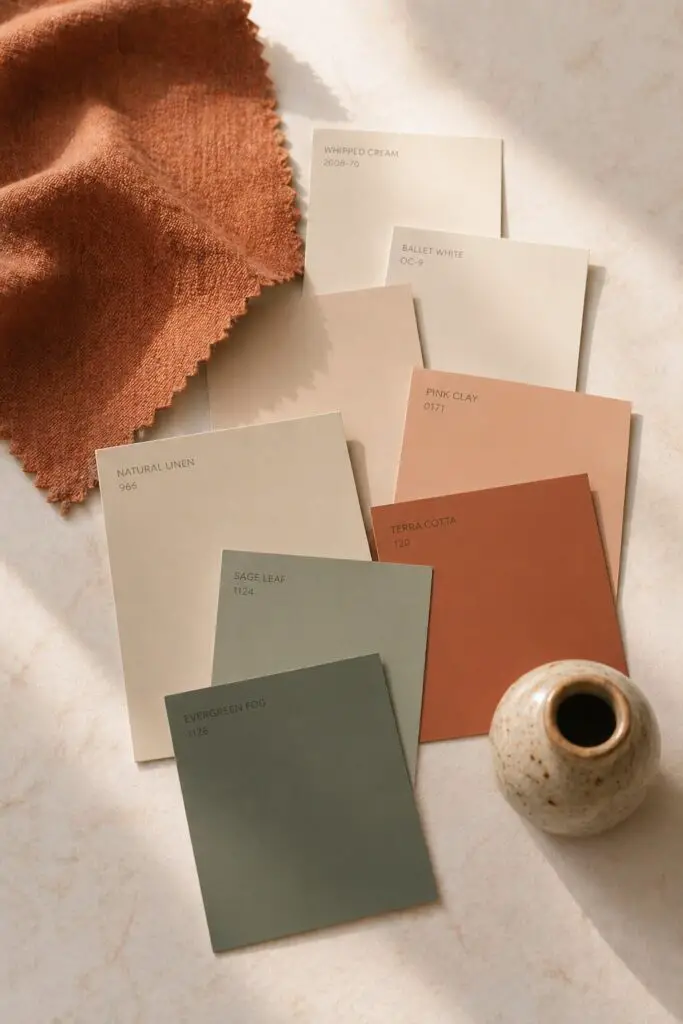
Not after you find a sofa you love. Not after you’ve painted the walls. Before any of it.
When you shop without a colour palette, you end up with a room full of things that have nothing to say to each other. A grey sofa, warm oak shelves, a cool blue rug, a terracotta lamp — each one fine on its own, together an absolute state. Sit down and work out three to five colours you actually want to live with. One does most of the heavy lifting — the walls, the big furniture, the rug. One plays a supporting role. One or two show up in small ways. Once you have those written down, shopping becomes so much easier. You stop picking things up and going “maybe?” and start knowing almost immediately whether something belongs.
The easiest way to find your palette is to save a load of room photos you genuinely like, then look at what they have in common. You’ll spot it within five minutes.
2. Measure before you fall in love with anything

I bought a dining table online. It was beautiful. It arrived and I couldn’t open the back door.
Get a tape measure and write down the dimensions of every room — length, width, ceiling height, and every doorway and corridor the furniture has to get through to arrive there. Then when you find something you like, check the dimensions before you let yourself get attached.
Before any big purchase, lay out the footprint on the floor with masking tape. It sounds excessive until you realise you’ve just saved yourself from buying a sofa that leaves about a foot of walking space around it. It takes twenty minutes and costs nothing.
3. The lighting is probably the whole problem
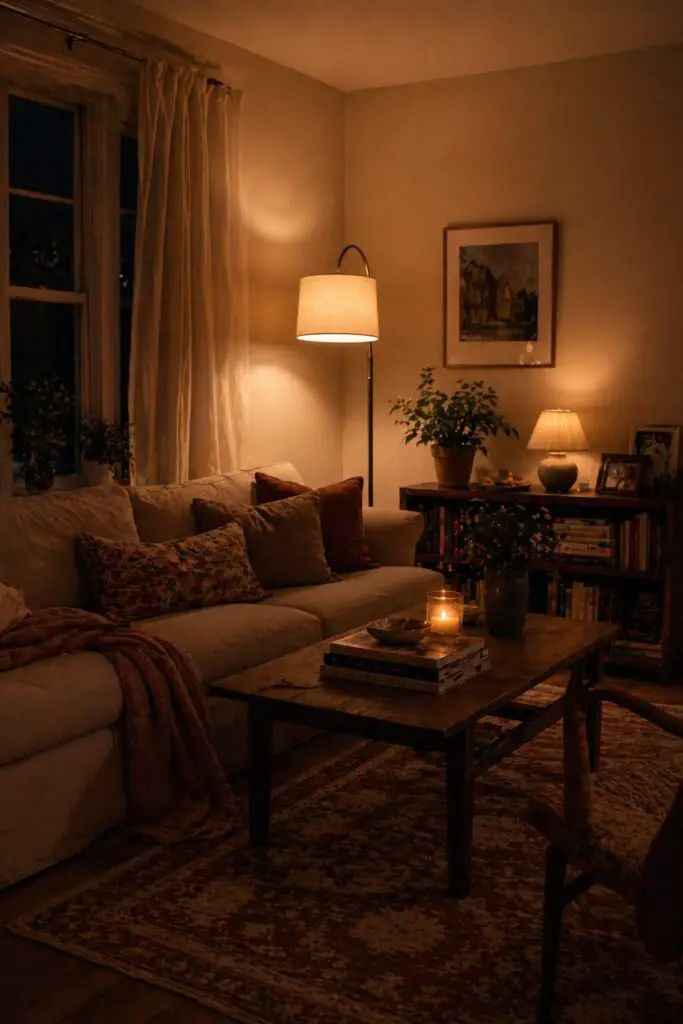
If your room feels off and you can’t put your finger on why, it’s almost certainly the lighting.
One ceiling light in the centre of a room is not interior design. It’s a placeholder. It flattens everything, throws unflattering shadows, and makes even genuinely nice furniture look a bit grim. What actually works is light coming from several different heights and directions — a lamp in the corner, something on the side table, a pendant over the dining table. A single floor lamp in the right spot will do more for a sitting room than almost anything else you could buy.
Also change the bulbs. Cool white bulbs make rooms feel like a supermarket. You want warm white, somewhere between 2700K and 3000K on the box. It’s a five-minute job that costs almost nothing and the difference is immediate.
4. Know what to spend on and what not to
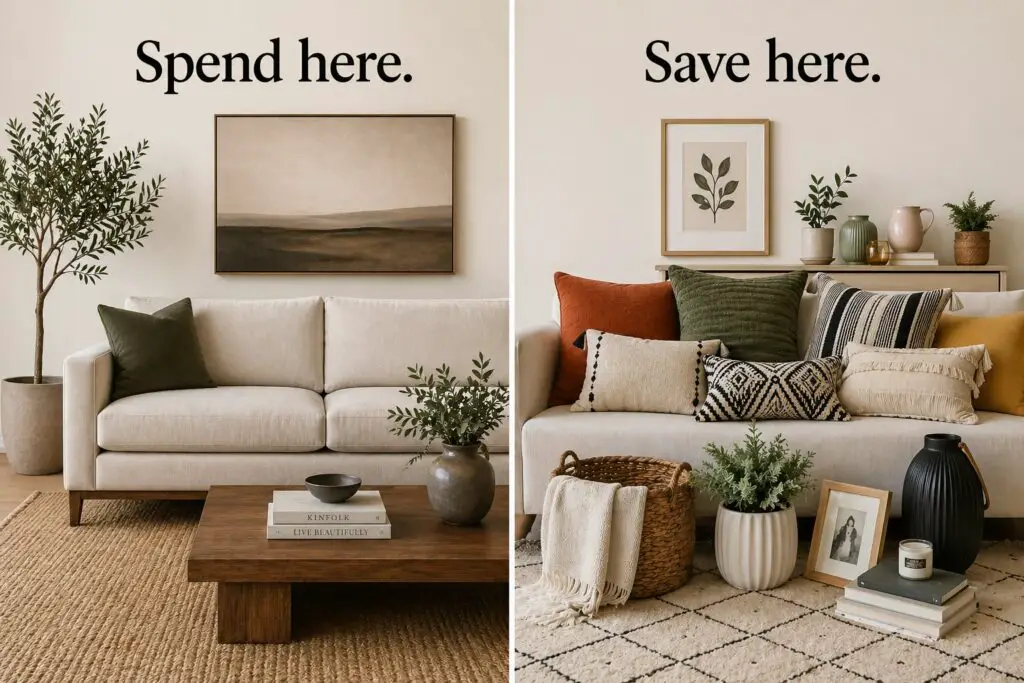
Some things carry a room and a cheap version will show itself up within months. The sofa. The mattress. A good rug. These are worth spending properly on because you use them every single day and they age in plain sight.
Everything decorative is fair game for cheap. Cushion covers, throws, candles, little objects, picture frames, side tables — none of it needs to cost a fortune, and you’ll change your mind about most of it over time anyway. Nobody coming round to yours is going to clock that your candle holder came from a discount shop. Buy the cheaper version, enjoy it, replace it when you fancy something different.
5. The rug needs to be bigger than you think
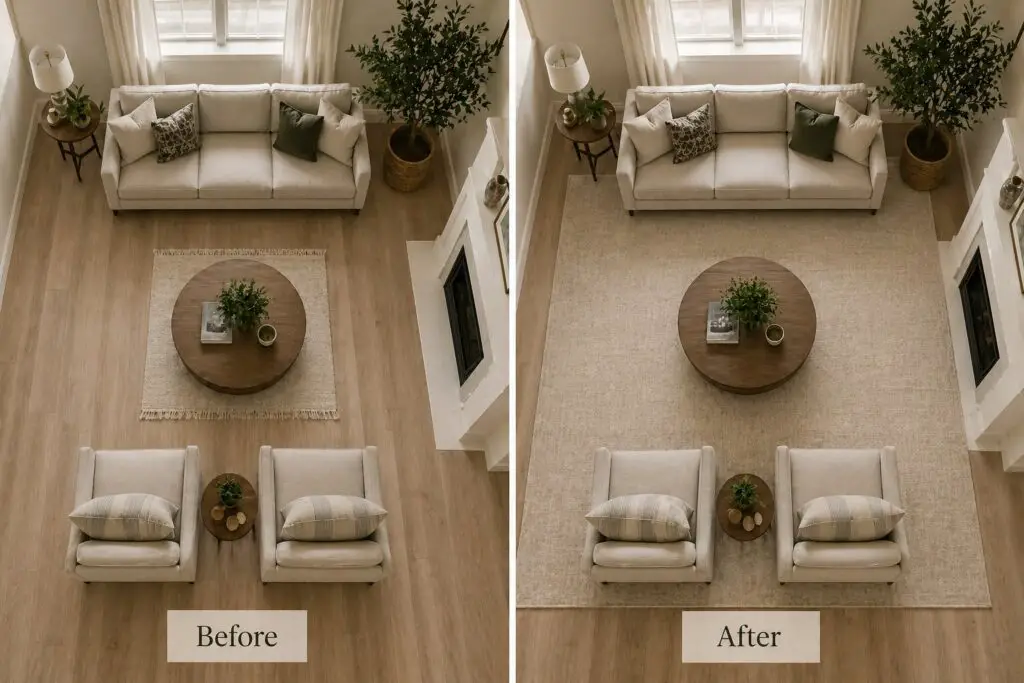
Almost everyone buys a rug that’s too small. A rug that’s too small looks like a doormat plonked in the middle of the room. It separates the furniture rather than pulling it together.
In a sitting room, the front legs of the sofa and chairs should sit on the rug. If they’re floating off it, it’s too small. In a bedroom, the rug should come out far enough on both sides that your feet land on it when you get out of bed. When you think you’ve found the right size, go one size up. You’ll almost never regret it.
6. Live in the space before you decorate it
If you can give yourself four to six weeks before making any big purchases, you’ll decorate far better than if you rush. You’ll find out that the corner you planned to put the desk in gets no natural light by mid-afternoon. That the wall you were going to paint dark faces the wrong direction and would feel like a cave come winter.
Living in a space teaches you things about it that no floor plan ever will. The rooms that end up feeling right are almost always the ones that were thought about slowly.
7. Texture matters as much as colour
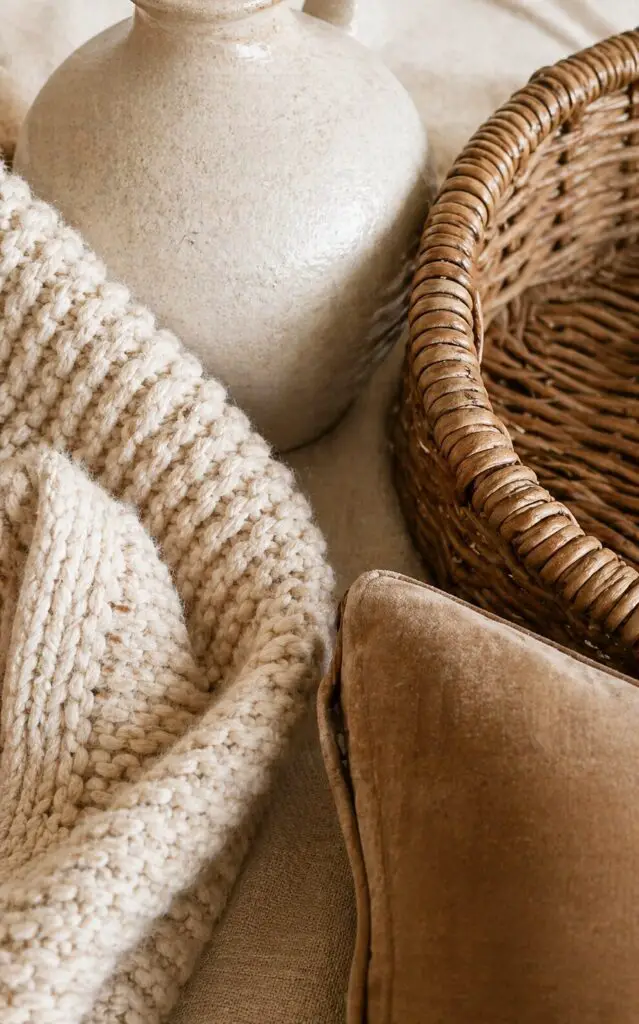
A room where everything has the same kind of surface — all smooth, all shiny, all flat — feels lifeless even when the colours are spot on. What gives a room warmth is contrast between materials. Rough linen next to smooth ceramic. A wool rug under a lacquered coffee table. A rattan chair beside a velvet cushion.
You don’t need to spend more money to get this right. You just need to think about it. If everything in the room already feels the same, whatever you buy next should feel different.
8. Hang your curtains near the ceiling, not near the window
Most people hang the pole just above the window frame, exactly as wide as the glass. This makes windows look small, ceilings look low, and rooms feel poky.
Put the pole as high as you can, close to the ceiling. Extend it out beyond the window on both sides, far enough that when the curtains are open they don’t cover any of the glass. Use curtains that go all the way to the floor. It makes the window look bigger, the ceiling look taller, and the room look like someone who knew what they were doing had a hand in it. It costs nothing extra. It’s just where you put the screws.
9. Decorate for the life you actually have
The rooms that feel genuinely good to be in are designed around what the people in them actually do. If you’ve got a dog, the pale boucle sofa is going to be a nightmare. If you’ve got kids doing homework at the kitchen table every evening, that table needs to be practical before it’s anything else. If you cook a lot, that’s where the money goes.
When you’re buying something, the only question that matters is whether it works for how you actually live. Not whether it photographs well. Not whether it matches something you saw on someone’s Instagram. Whether it works for you, on an ordinary Wednesday.
Get those decisions right and the rest tends to sort itself out.